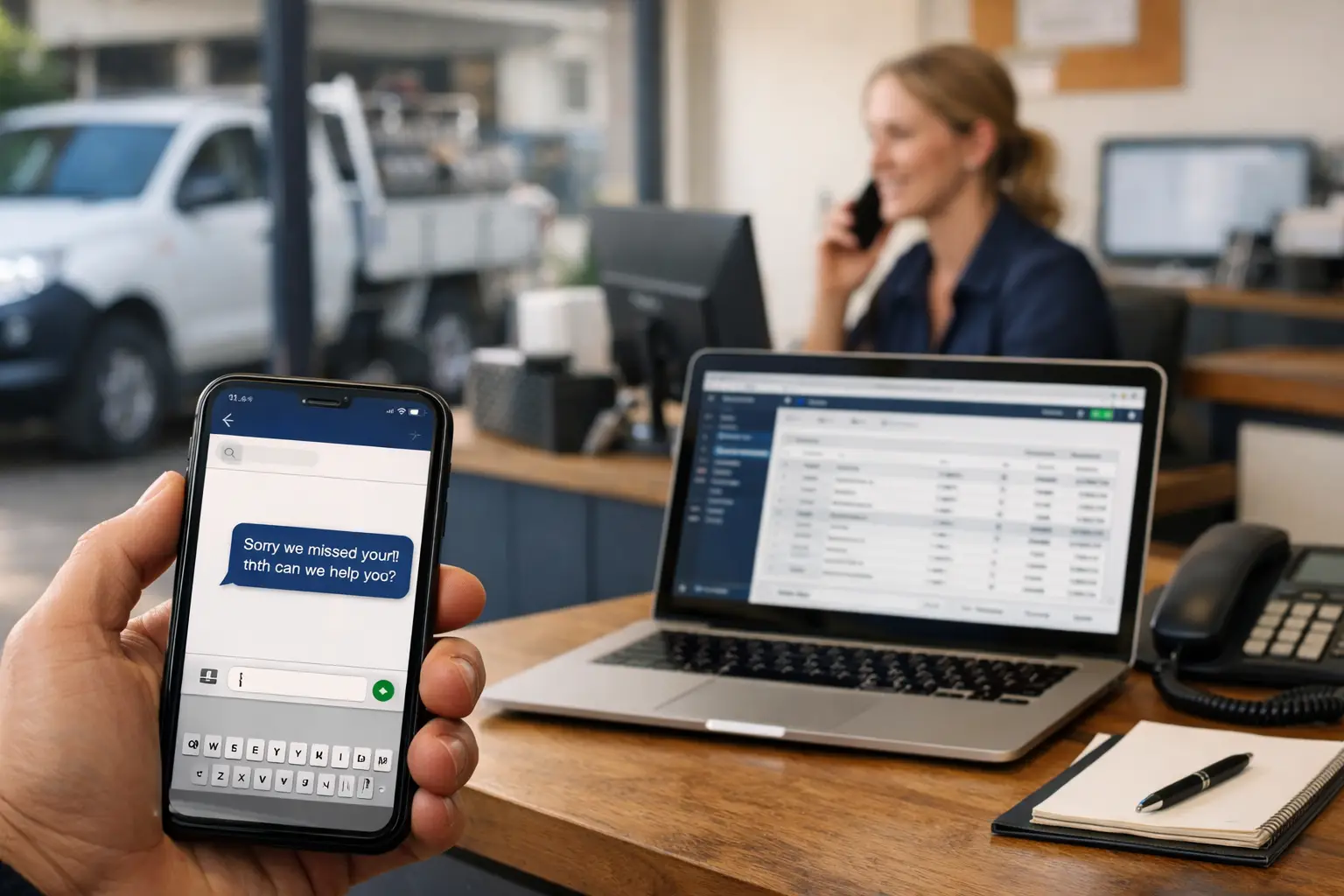
A missed call is rarely just a missed call. For a plumber under a sink, a clinic team with patients in rooms, or a consultant in a client meeting, it is an enquiry that may ring the next business on Google before you are free to call back. When you automate missed call text back replies, the caller gets an immediate acknowledgement and a clear next step instead of silence.
That does not mean replacing real conversations with a robotic message. It means protecting the few minutes after an enquiry arrives, when a prospect is deciding who looks responsive, organised and easy to deal with.
Why missed calls quietly cost small businesses
Most established small businesses do not have a lead problem. They have a response-time problem.
The phone rings while your team is driving between jobs, treating a patient, quoting work, managing a property inspection or handling an existing client. Someone intends to return the call later. Then another job runs over, the number is unfamiliar, and the enquiry is buried beneath the rest of the day.
The caller does not see the context. They see a business that did not answer.
This is especially costly for urgent or high-intent enquiries. A homeowner with a leaking hot-water system, a parent looking for an appointment, or a business owner needing help now is not usually building a spreadsheet of options. They are calling until somebody responds. The business that acknowledges them first often gets the opportunity.
Manual call-backs still matter, but relying on memory, sticky notes and a busy team creates uneven service. One staff member is excellent at follow-up. Another assumes someone else has handled it. Before long, the inbox, call log and front desk become a one-person emergency room.
What an automated missed-call text back should do
A good missed-call text is simple, immediate and useful. It should confirm that the caller has reached the right business, set a realistic expectation, and give them one easy way to move forward.
For example:
> Thanks for calling [Business Name]. We are helping clients right now and could not take your call. Reply with what you need, or book a suitable time and we will get back to you shortly.
For a trades business, the message may ask for a suburb and a short description of the issue. A clinic may direct patients to an online booking option or ask them to reply with their preferred appointment time. A professional services firm may ask what service they need before a team member calls back.
The wording should fit your operation. Promising a call back “within five minutes” sounds good until your team cannot reliably deliver it. It is better to promise a timeframe you can keep, such as “today” or “within one business hour”, then build your internal process to meet it.
The goal is not to force every person through a maze of messages. It is to stop warm enquiries going cold while your people are doing work that cannot be interrupted.
How to automate missed call text back without creating chaos
The technology is the easy part. The operational decisions are where most systems either pay for themselves or become another neglected app.
1. Decide which calls should trigger a text
Not every unanswered call is a new lead. You may want the automation to trigger only during business hours, only for calls to a specific number, or only when the caller is not already an active client.
This depends on your business. A home-services company may send a message after every missed call because calls are often urgent enquiries. A medical or allied health practice needs more caution around privacy and should avoid inviting sensitive health information by SMS. A professional firm may use separate numbers for existing client support and new-business enquiries.
Start with the calls that are most likely to represent revenue you could otherwise lose.
2. Write a message that earns a reply
A generic “Sorry we missed your call” is better than nothing, but it leaves the caller to do the work. Give them a low-effort prompt.
For a trade, that could be: “Reply with your suburb and the job you need help with.” For an agency: “Reply with the property address or service you are calling about.” For an IT provider: “Reply with your business name and a brief description of the issue.”
Keep it short. SMS is not the place for a full sales pitch, a long list of services or a string of links. The first job is to keep the conversation alive.
3. Send the enquiry to the right person immediately
An instant text back only works if the reply lands somewhere visible. When a caller responds, the enquiry should create a clear task for the appropriate person, with the caller’s name, number, time of call and message attached.
That might be your receptionist, office manager, sales coordinator or the owner in a smaller operation. The key is ownership. If everyone receives the notification, nobody may feel responsible for responding.
A well-designed system can also separate leads from routine calls, tag the enquiry source, and record the conversation against your client system. That gives you a proper view of what happened rather than a patchwork of mobile messages.
4. Set the human follow-up standard
Automation buys time. It does not remove the need for a capable person to respond.
Define who follows up, how quickly they must act, and what happens if they cannot reach the caller. For many small businesses, a practical standard is an attempted call back within the same business hour, followed by a second message if there is no answer. Higher-value leads may deserve faster treatment.
Review this with the team. If the owner still handles every follow-up after hours, the system has exposed a staffing or process issue worth fixing. That is useful information, not a failure of the automation.
The difference between a text message and a lead system
A missed-call reply can be set up quickly. But a standalone text message is only a partial solution if the rest of the follow-up stays manual.
The stronger approach connects the call, text response and staff action into one operating process. A new caller receives an acknowledgement. Their reply is captured. The right person is notified. The lead is tracked until it is booked, quoted, won or marked as not suitable. If nobody follows up, there is visibility instead of guesswork.
This matters when your business has more than one person answering phones, multiple service lines, or a steady volume of enquiries. It also matters when you are spending money on Google Ads, local search, referral partnerships or social media. Paying to generate calls and then losing them in a busy afternoon is an expensive leak.
Archway Automation approaches this by first identifying where enquiries are actually breaking down. Sometimes the missed call is the issue. Sometimes the business replies quickly but has no booking path, no follow-up ownership, or no record of leads that went quiet. Fixing the visible symptom without the bottleneck behind it can leave money on the table.
Common mistakes to avoid
The first is sending a message that sounds automated in the worst way. Overly cheerful copy, excessive emojis and vague promises can make an established business look less professional, not more.
The second is treating every reply as an emergency without a triage process. If your team receives dozens of messages without priorities, the system can simply move the clutter from the call log to the inbox. Use clear categories for urgent work, new leads, existing clients and unsuitable enquiries.
The third is forgetting consent and privacy. SMS marketing rules and privacy obligations matter, particularly when using customer details for ongoing promotional messages. A transactional message responding to a missed call is different from adding someone to a marketing campaign. Keep those purposes separate, collect appropriate consent, and seek advice for your industry requirements.
Finally, do not set and forget. Check the first few weeks of results. Are callers replying? Are staff calling them back on time? Are particular messages producing better-quality information? A small adjustment to wording or routing can make a material difference.
When this automation is worth prioritising
If your team misses calls most days, has inconsistent lead follow-up, or depends on the owner remembering who called, this is usually a high-value place to start. It is also a sensible priority when you have invested in lead generation but cannot confidently say how many calls became appointments, quotes or clients.
It may be less urgent if every call is already answered by a dedicated receptionist and your follow-up records are reliable. Even then, an after-hours missed-call response can protect enquiries outside your normal coverage.
The right system should feel almost invisible to your team. Callers get a prompt, professional response. Staff see the information they need. Nothing slips through the cracks because someone was out on site, in a meeting or simply flat out.
Your phone does not need to be answered every second of the day. But every genuine caller should have a reason to wait for you rather than ring the next business.